Brand guidelines
A fixed mark, a flexible voice.
The geometry never changes. The colour is yours to play with. Three core lockups for product surfaces, an open expression system for everything else.
Version 1.2 · SVG · Updated 8 October 2026
The mark
Drawn once, never redrawn.
A rounded tile and an abstracted r, built on a 512-unit grid and set by eye where the grid falls short.
The tile
A rounded square drawn on a 512-unit grid. The corner radius is 128, exactly a quarter of its width. Never detach the counterform from it or change the radius.
The counterform
An abstracted lowercase r, the stem descending and the arm reaching right, set on soft 20-unit radii. Its bounding box is 256 × 256, exactly half the tile in each dimension.
Optically centred
The counterform sits 6 units right and 15 units below the tile’s mathematical centre. This is deliberate: the full-width top bar makes the form top-heavy, and the hollow corner wants a whisper of rightward correction. Don’t “fix” it.
Two-tone, any tone
The mark is always a two-tone pairing, tile plus counterform. Green on mist is home base, but the pairing is built to be recoloured.
Vector first
Always reproduce from the supplied SVG sources. Don’t redraw, trace or approximate the geometry.
Lockups
Three lockups, one per ground.
The horizontal lockup pairs the icon with the lowercase wordmark. Exactly three colour variants exist, one per approved background. Pick by background; never improvise a fourth.
The geometry is fixed in the artwork: the icon-to-wordmark gap is 128 units, exactly the tile's corner radius, and the wordmark sits a touch below mathematical centre, mirroring the counterform's own optical drop. Never re-space or re-align the pair by hand: use the files.
Expression
A fixed shape, open colour.
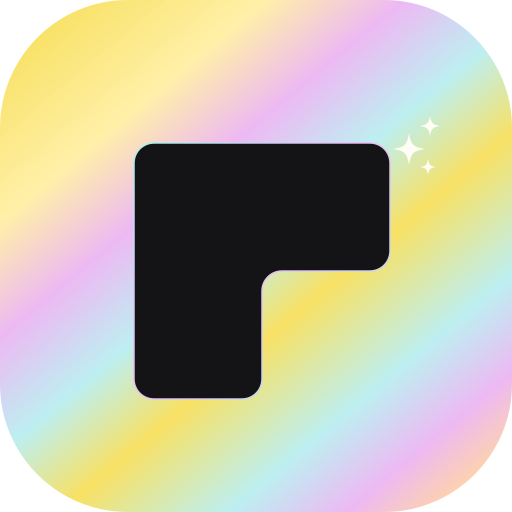
In marketing, social, events, swag and seasonal moments, recolour the mark, pair it with imagery, give it depth. The geometry carries the brand, so the colour doesn't have to.
Geometry is sacred
Recolour anything; redraw nothing. The tile, radius and counterform never change.
Keep the two-tone contrast
Tile and counterform must read clearly against each other. Bold pairings, gradients and shadows are all fair game while the shape stays legible.
Product stays calm
Expressive colourways are for brand moments. In product UI, docs and legal contexts use the three core lockups.
The wordmark plays too
The wordmark can take colour as well. Keep it a single colour with clear contrast against the ground.
Clear space and size
Give it room, keep it legible.
Define x as one quarter of the tile height, the same measure as the tile's corner radius. Keep at least 1x of clear space on all sides, free of text, imagery and competing marks.
Lockup: never smaller than 120 px wide on screen, 30 mm in print.
Icon alone: never smaller than 24 px on screen, 8 mm in print. Below these sizes the notch closes up, so switch to the icon when space is tight.
Colour
Green, mist and ink.
The core palette anchors the brand: it's what the product, documents and wordmark always use. The icon can step outside it for expressive moments. Click any value to copy it.
Misuse
The few lines we don't cross.
Colour, depth and texture are open. The shape and legibility are not.
Don't stretch, squash or distort the proportions.
Don't rotate or tilt the mark at any angle.
Don't redraw the geometry: the radius and counterform are fixed.
Don't use low-contrast pairings: tile and counterform must read.
Don't place it on busy patterns or imagery without clear contrast.
Don't outline the mark: it’s built from solid forms.
Assets
Use the files, not a screenshot.
Marks are supplied as vector SVG, with a full-bleed PNG for Slack. Use the files directly. Don't export from this page.
reeve-lockup-light.svg
Lockup, primary: for white and mist
reeve-lockup-green.svg
Lockup, inverted: for Reeve green
reeve-lockup-dark.svg
Lockup: for ink and dark grounds
reeve-icon.svg
Icon: standalone 512 × 512, for avatars and app icons
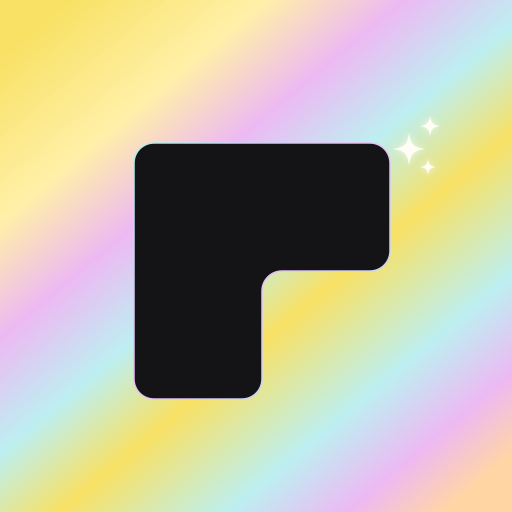




reeve-icon-cutout.svg
Icon: see-through counterform, one fill, recolour at will